China
China
 Malaysia
Buying kraft paper tape sounds straightforward until you actually look at a supplier catalog. There is no universal option.
Grabbing a random roll and hoping it holds your specific shipments together usually ends poorly. To get the right tape, you have to look at the cardboard type, the total weight of the package, and what your packing station actually looks like. Here is the breakdown.
How do you want the tape to stick? That is the first real decision.
Self-Adhesive Kraft Paper Tape
Think of this as normal packing tape, just made of paper. You pull it off the roll, tear it by hand without needing a sharp dispenser, and press it down. You can even write directly on the uncoated surface. No water involved. For small parcels or quick manual packing stations, this simple peel-and-stick option makes a lot of sense.
Water-Activated Tape (WAT)
The adhesive on these rolls is completely dry. Moisture is the only trigger that makes it work. Adding water allows the glue to bond right into the cardboard fibers, leaving you with a really strong, durable seal. It also holds up against temperature drops and high humidity without peeling off. Going this route is usually the better choice if your main focus is tamper-evident security, heavy shipping, or achieving consistent application (assuming you pair it with a dispenser).
What are you actually shipping? The box dictates the tape.
If you are shipping light or standard corrugated cartons, a standard kraft paper tape is usually sufficient. But heavy cartons change the rules. Heavy loads put serious strain on the box flaps. For this, you want reinforced water-activated tape. It has fiberglass yarns woven into it, giving you the tensile and tear resistance needed to keep heavy shipments locked tight. Just remember that a weak box will still fail, no matter how strong your tape is.
Tape width matters, too. A narrower tape is fine for light, small cartons. Wider tapes give you greater coverage across the carton flaps. If you are dealing with larger boxes or wider gaps, that extra surface coverage is usually a better fit for the job.
The physical packing process itself matters a lot here.
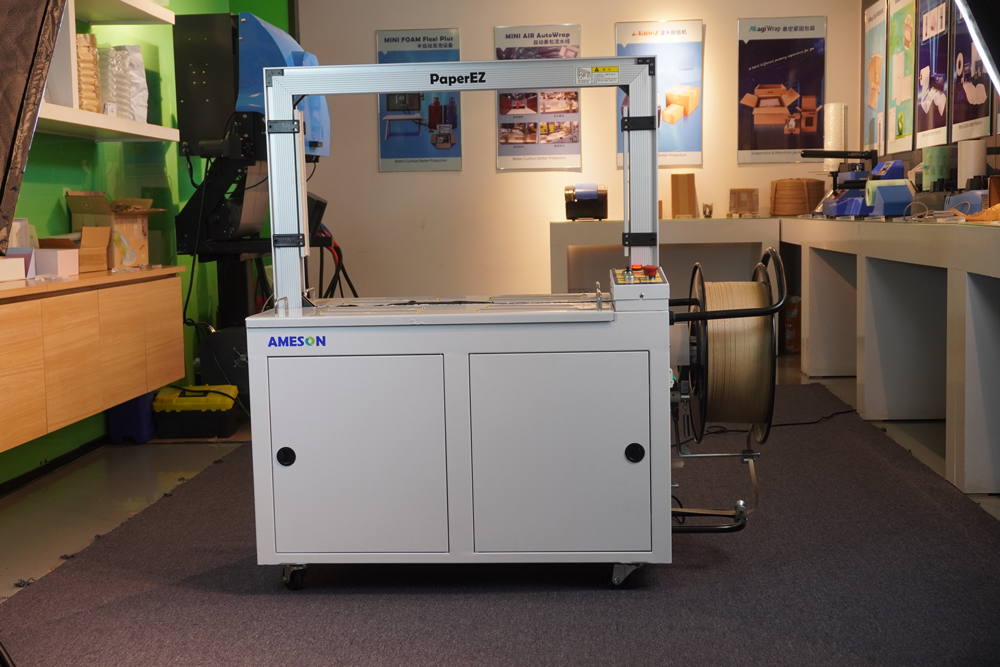
Doing low-volume packing by hand? Self-adhesive tape or a cheap wet sponge dispenser will get the boxes out the door. Scaling up changes things. If a warehouse pushes out high volumes and plans to use water-activated tape, doing it manually becomes a massive bottleneck. Adding a dedicated tape dispenser to the line is the standard fix for getting consistent wetting and fast application.
Then look at the outside of the box. Getting a logo or specific handling warnings onto a shipment is pretty simple with printable kraft paper tape. It puts your branding right onto the package without the glare of plastic film. Plus, since both self-adhesive and water-activated tapes are paper-based, the end customer can usually recycle the whole box without peeling the tape off first.
Still not sure which one fits? Use this breakdown to match the tape directly to your packaging needs:
| Packaging Need | Recommended Tape |
| Small/light parcels | Self-adhesive kraft paper tape |
| Quick manual sealing | Self-adhesive kraft paper tape |
| Standard corrugated cartons | Either, depending on workflow |
| Heavy cartons | Reinforced water-activated tape |
| Tamper-evident sealing | Water-activated tape |
| High-volume WAT sealing | Water-activated tape + dispenser |
| Custom printed packaging | Printable kraft paper tape |